Most life insurance writing assumes a young family with a mortgage. Plenty of people are past that stage — children grown, mortgage cleared, no one depending on their income. They often conclude they need no insurance at all.
Frequently right. But there is a narrower need that persists, and it is worth understanding rather than dismissing.
The costs that arrive at death
Even a modest estate generates immediate expenses, and they land during the worst weeks of a family's life:
- Funeral and burial or cremation — commonly several thousand dollars, sometimes considerably more
- Outstanding debts — credit cards, a car loan, final utility and medical bills
- The final tax return — the deemed disposition of capital property can produce a real bill
- Probate fees — roughly 1.5% of estate value in Ontario above the threshold
- Travel — relatives coming from abroad, which for many families is a significant cost
- Legal and administrative costs of settling the estate
The problem is rarely total wealth. It is timing. Estate assets are frequently frozen until probate completes, which takes months, while the funeral home wants payment now.
What final expense insurance is
A small permanent life insurance policy, typically between $10,000 and $50,000, that does not expire and pays quickly to a named beneficiary outside the estate.
The important features are the size and the accessibility. These policies are usually simplified issue — a short health questionnaire, no medical exam — or guaranteed issue, with no health questions at all. That makes them available to people who would struggle with fully underwritten coverage.
Guaranteed issue policies almost always carry a waiting period, commonly two years, during which death from natural causes returns premiums rather than paying the face amount. Accidental death is typically covered immediately. This is not a trick; it is how an insurer can accept everyone. But it must be understood before buying.
Who genuinely benefits
- Someone with limited liquid savings whose family would struggle to fund a funeral immediately
- Someone whose health rules out fully underwritten coverage
- Someone who wants to leave a specific modest legacy to a grandchild or a charity with certainty
- Someone with an illiquid estate — a house and little cash — where heirs need money before probate completes
Who probably does not
I would rather say this plainly, because final expense insurance is sold heavily and sometimes to people who do not need it.
If you have ample accessible savings — enough that your family could cover several thousand dollars without difficulty — you may be better off simply earmarking that money. Insurance involves paying premiums for a certain event, and if you live a long time you may pay in more than the policy pays out. A designated savings account can do the same job with more flexibility.
The case for insurance strengthens where savings are thin, health limits alternatives, or the certainty and speed of a direct beneficiary payment genuinely matters.
Final expense insurance is marketed aggressively, particularly to seniors, sometimes with no health questions and cheerful pricing. Check three things: whether there is a waiting period, whether premiums increase with age, and what the total premiums would amount to by your late eighties. Some plans cost more in premiums than they ever pay out.
Practical points
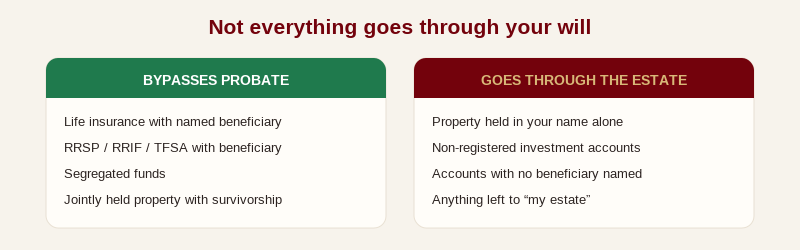
Name a person, not your estate. Naming the estate pulls the money into probate — defeating the entire purpose, which is fast access to cash.
Tell someone it exists. A significant number of policies go unclaimed simply because the family never knew. Write down the insurer and policy number and make sure your executor can find it.
Consider whether existing coverage already handles it. If you hold a permanent policy from years ago, or a term policy with remaining years, you may already be covered. Reviewing what you have costs nothing and sometimes prevents an unnecessary purchase.
An honest closing
This is a small, specific product for a small, specific need. It is not a wealth-building tool and should never be sold as one. Used properly, it means a grieving family can arrange a funeral without a credit card, and that is a genuine kindness.
If you want to know whether you actually need it — including hearing that you do not — I am happy to look at your situation.
The costs that actually arrive
| Cost | Notes |
|---|---|
| Funeral or cremation | Varies enormously by choice; cremation is substantially less |
| Burial plot and interment | A large separate cost where burial is chosen |
| Final income tax return | Often the big one — RRSP or RRIF balances are generally taxable at death |
| Probate and legal fees | Where the estate passes through the will |
| Clearing a property | Cleaning, repairs, storage, realtor costs |
| Travel for family | Frequently overlooked, especially with relatives abroad |
| Outstanding debts | Credit cards, a car loan, a line of credit |
Funeral costs get the attention, and the tax bill is often larger. A RRIF of meaningful size is included in income on the final return unless it rolls to a qualifying spouse, and the estate pays the tax before anyone inherits. Families regularly plan for the funeral and are blindsided by the return.
I have not quoted funeral figures because they differ so much by province, by provider and by the choices made. Ask two local funeral homes for a current price list — they are required to provide one, and the exercise takes an afternoon.
What the product actually is
Final expense insurance is permanent life insurance in a small amount, usually somewhere between $5,000 and $50,000, designed to be simple to buy at older ages. Premiums are typically level for life and the cover does not expire.
| Type | Health questions | Pays immediately? | Cost |
|---|---|---|---|
| Fully underwritten | Full questions, maybe a medical | Yes | Lowest |
| Simplified issue | A short list of questions | Usually yes | Middle |
| Guaranteed issue | None — nobody is declined | No — waiting period | Highest |
The waiting period is the detail that matters most. Guaranteed issue policies typically pay only the premiums paid, often with interest, if death occurs from natural causes within the first two years. Accidental death is usually covered from day one. Buy a guaranteed issue policy believing it pays immediately and the family discovers otherwise at the worst moment.
So the order to shop in is: try fully underwritten first, then simplified issue, and treat guaranteed issue as the option for people who cannot get the other two. Many people buy guaranteed issue when they would have qualified for something cheaper and better, because it was the one advertised to them.
Who genuinely benefits
- Someone with little liquid savings whose family would otherwise put a funeral on a credit card.
- Someone whose health rules out ordinary life insurance but who wants to leave something behind.
- Someone whose assets are tied up in a home or registered plans, where cash is needed before probate completes.
- Someone with a meaningful RRIF and a wish that the tax bill does not eat the inheritance.
- Someone who simply wants it handled, as a matter of not leaving it to the children. That is a legitimate reason on its own.
Who probably does not need it
Being straight about this matters, because this product is marketed heavily to older people and bought by plenty who do not need it.
If you have savings comfortably covering these costs and reachable quickly, you are insuring a bill you can already pay — and over enough years the premiums can exceed the payout. If you already hold adequate life insurance, this duplicates it. And if money is genuinely tight, a small amount saved monthly may serve better than a premium you might struggle to maintain, since a lapsed policy returns nothing.
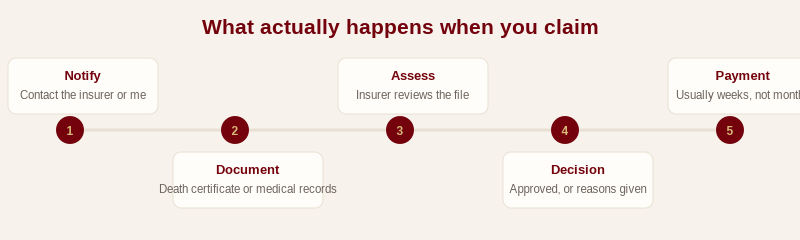
The one argument that survives all of that is certainty and timing: insurance pays a known amount to a named person within weeks, outside probate. Savings can be spent, lost to a late-life cost, or locked up in an estate for months.
Practical points
- Name a person, never "my estate". Naming the estate drags it through probate and exposes it to creditors, defeating the purpose.
- Tell that person the policy exists and where it is. Unclaimed policies are depressingly common.
- Check whether premiums stop at a certain age — some are paid up at 90 or 100, others continue for life.
- Be accurate on the health questions. Simplified issue policies are contestable in the early years; a misstatement can void the claim.
- Compare against a prepaid funeral plan, which locks in services rather than providing cash but is far less flexible.
- Write down your wishes separately. Money does not tell anyone whether you wanted burial or cremation.
If you would like a straight answer on whether this is worth buying in your situation, get in touch. If the honest answer is that your savings already cover it, I will say so. See also how much life insurance do I need and non-medical insurance.
Insurance or just savings? An honest comparison
| Small permanent policy | Money set aside | |
|---|---|---|
| Available immediately | Full amount from day one (subject to any waiting period) | Only what you have saved so far |
| Reaches the family | Directly, in weeks, outside probate | May be frozen in the estate for months |
| Can be spent early | No | Yes — and often is |
| Total cost if you live long | Premiums can exceed the payout | You keep everything |
| If premiums become unaffordable | Policy may lapse with little back | The money is still yours |
The honest summary: insurance wins on timing and certainty, savings win on flexibility and total cost. Someone who dies early gets far more from the policy than they paid; someone who lives to 95 may pay more in premiums than the policy ever returns. Nobody knows which they will be, which is the whole point of insurance — but it is also why "just save it" is a respectable answer for a disciplined saver with enough income.
A word about how this is sold
Final expense is advertised heavily to older Canadians, often by mail or daytime television, and often as guaranteed acceptance with no health questions. Two things worth knowing when one of those offers arrives.
First, "no medical questions" is a feature you pay for, and you should only pay for it if you need it. Anyone in reasonable health should be quoted on a fully underwritten or simplified issue basis first, which is usually cheaper and pays from day one.
Second, the advertised monthly figure is usually the lowest band — the youngest age and the smallest coverage. The quote for your age and the amount you actually need will differ. Ask for a written illustration showing the premium, the coverage, the waiting period and whether premiums ever stop.
None of this makes the product bad. It makes it a product to buy on comparison rather than on the first offer that lands in the mailbox.