Insurance & investment guides for Canadians
Clear, practical explanations of the things clients ask me about most — written in plain language, with no sales pitch.
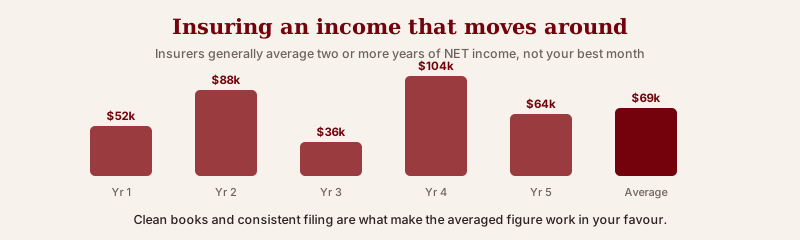
Getting Insured When Your Income Is Irregular
Insurers want a stable number. If yours moves by 50% year to year, the answer isn't that you can't get covered — it's that presentation matters more.
Read the guide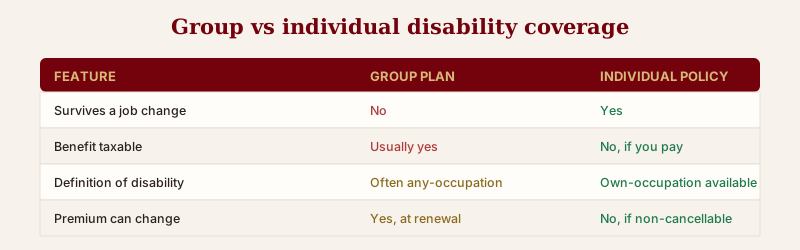
Group vs Individual Disability Insurance: A Real Comparison
Two plans both replacing 66% of income can deliver very different outcomes. The differences are not obvious until you need to claim.
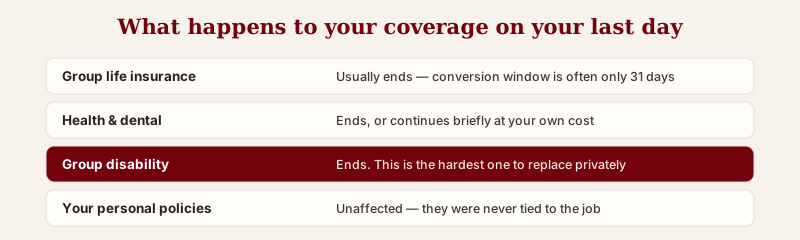
What Happens to Your Insurance When You Leave Your Job
Group coverage feels permanent right up until it isn't. The window to convert it without a medical is often just 31 days, and almost nobody is told.
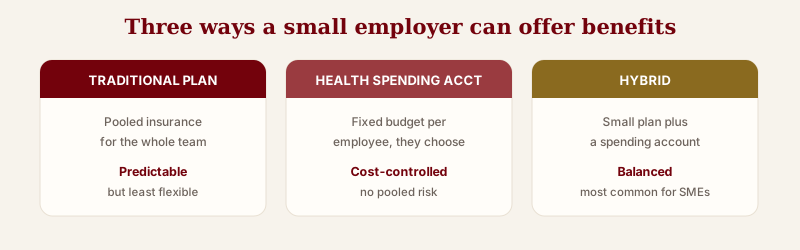
Group Benefits for Small Businesses: Is It Worth It?
You want to keep good staff without signing up for premiums that jump 30% because one employee had a difficult year. There are three structures, and the middle one is underused.
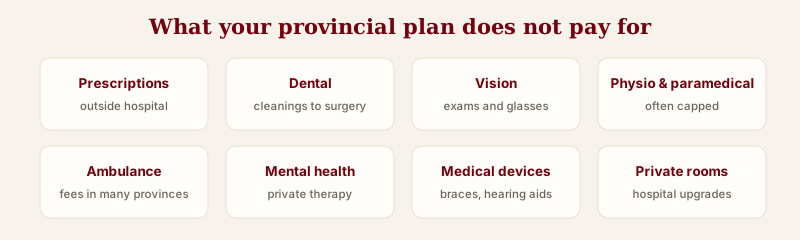
Health and Dental Insurance When You Don't Have a Group Plan
Canadian healthcare covers the doctor but not the dentist, the prescription, the physiotherapist or the glasses. Without a group plan, that adds up quickly.
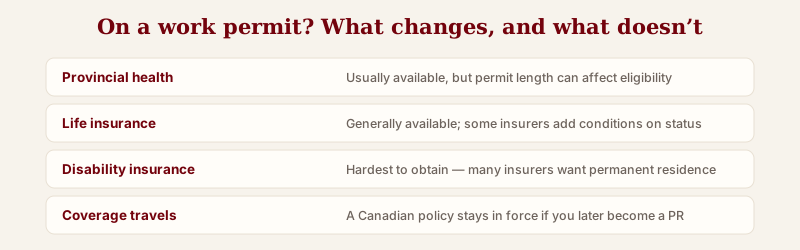
Getting Insurance in Canada on a Work Permit
Temporary status does not mean you cannot get covered. It does mean insurers treat you differently, and they differ from each other more than usual.
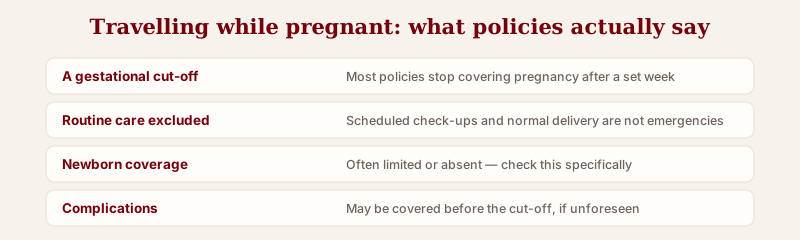
Travel Insurance While Pregnant: What's Actually Covered
Most policies cover pregnancy up to a certain week and then stop entirely. The bigger surprise is what happens if a baby arrives abroad.
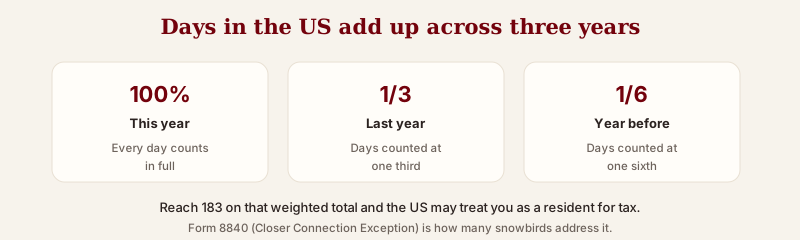
Snowbirds and US Tax: The 183-Day Trap
You can spend under six months a year in the US and still be treated as a US tax resident, because the test counts days from the two previous years too.
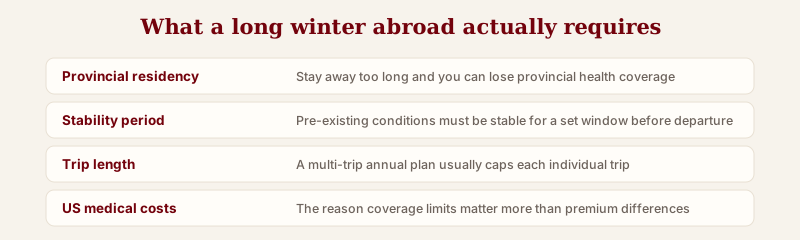
Snowbird Travel Insurance: What Long Winters Abroad Actually Require
Six months in Arizona is not just a longer holiday. It touches your provincial health coverage, your pre-existing condition clauses and your trip-length caps all at once.
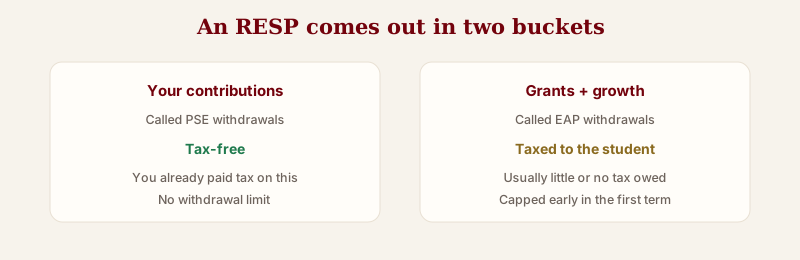
Can Grandparents Open an RESP? Yes — Here's How to Do It Well
It's one of the most useful gifts a grandparent can make. It's also easy to accidentally trigger a penalty by opening a second plan nobody coordinated.
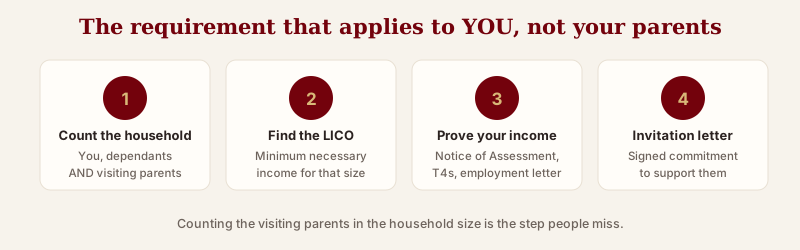
The Super Visa Income Requirement: The Part That Applies to You
Most Super Visa attention goes to the insurance. But the requirement that most often disqualifies families is the one that applies to the host's income.
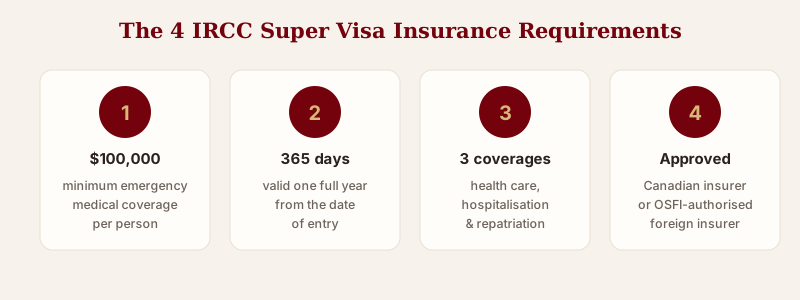
Seven Mistakes That Delay or Sink a Super Visa Application
Most Super Visa refusals come down to a handful of avoidable errors. Here they are, in roughly the order I see them.
Can You Buy Visitor Insurance After Your Parents Arrive?
Your parents landed without coverage and now you're worried. It can usually still be arranged — but what happened before the policy starts will not be covered.
What Actually Drives the Cost of Super Visa Insurance
Two families get quotes months apart for parents of the same age and see very different numbers. Here's what's actually moving the price.
Visitor Insurance vs Travel Insurance: What's the Difference?
The names sound interchangeable and the products are not. Buying the wrong one means discovering at a hospital that you have no coverage at all.
Super Visa vs Visitor Visa: Which Should Your Parents Apply For?
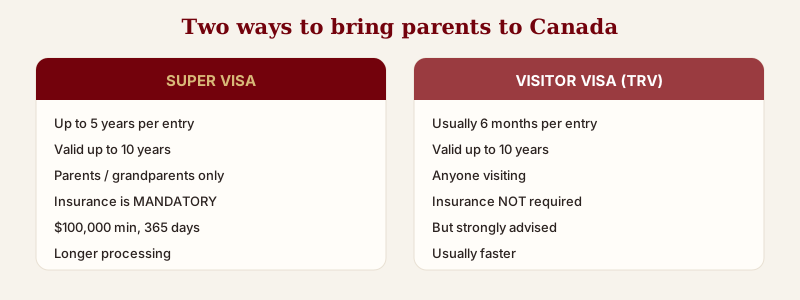
A visitor visa is cheaper and often faster. A Super Visa lets your parents stay five years instead of six months. Here's how to work out which one actually fits your family.
Critical Illness Insurance: What's Actually Covered?
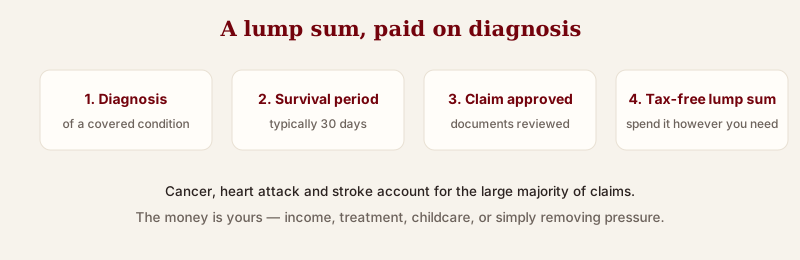
Policies advertise “25+ covered conditions”, but three of them account for most claims — and the definitions matter far more than the count.
Disability Insurance for the Self-Employed in Canada
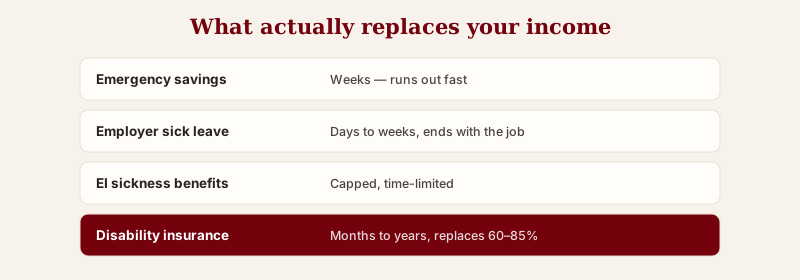
If you work for yourself and can't work, nothing happens automatically. No sick leave, no group plan, no HR department. Here's how to build the safety net yourself.
RESP Withdrawals: How to Take the Money Out Properly
Most RESP advice stops at how to put money in. Taking it out is where families lose money unnecessarily — usually by withdrawing the wrong bucket in the wrong order.
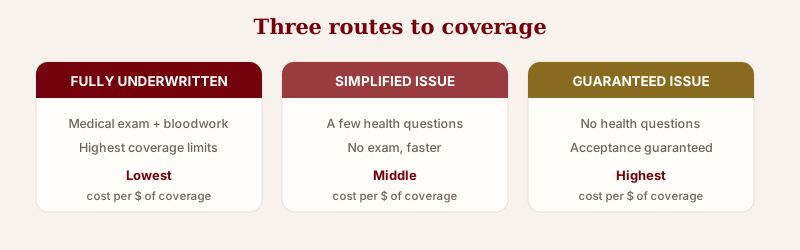
Life Insurance With a Pre-Existing Condition
One insurer declining you is not the market's answer. Underwriting varies enormously between companies, and there are three quite different routes to coverage.
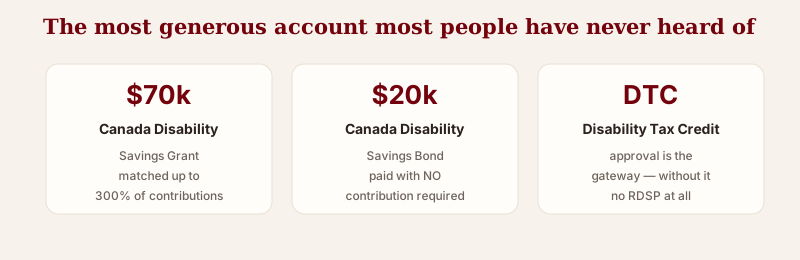
The RDSP and Disability Tax Credit: Canada's Most Overlooked Benefit
Government matching of up to 300%, and money paid in even if you contribute nothing. Yet a large share of eligible Canadians have never opened one.
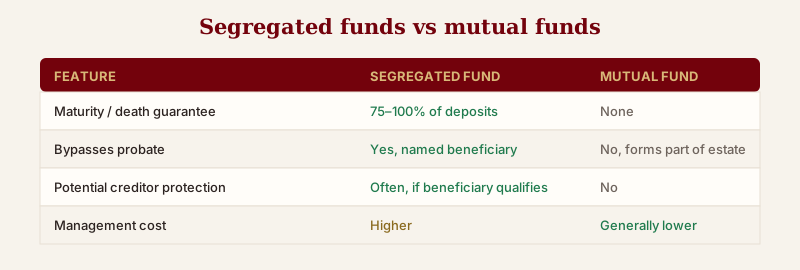
Segregated Funds vs Mutual Funds: What's the Difference?
Segregated funds cost more than mutual funds. Sometimes that buys something genuinely valuable, and sometimes it just costs more. Here's how to tell which.
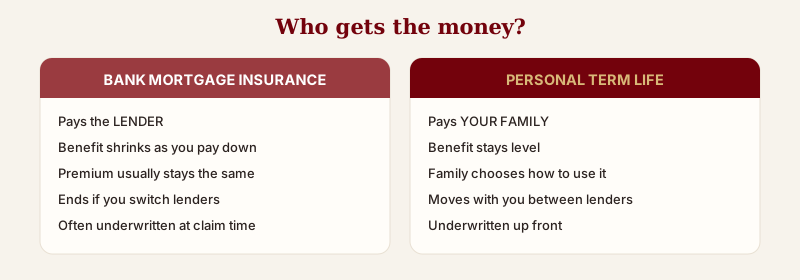
Bank Mortgage Insurance vs Term Life: Which Protects Your Family?
You sign for it at the mortgage desk in about ninety seconds. For most families, a personal term policy does the same job better and cheaper — here's why.
Visitor Insurance for Parents: A Practical Checklist
Your parents are coming for a few months and don't need a Super Visa. Here's the short list of things that decide whether the policy actually works.
Super Visa Insurance: Monthly or Pay the Year Up Front?
A full year of coverage up front is a large cheque. Monthly plans changed that — but there are three differences worth understanding before choosing.
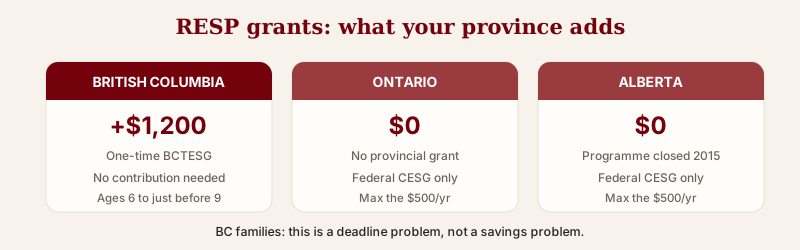
The $1,200 BC Families Miss: The Provincial RESP Grant Explained
It requires no contribution, no matching, and no ongoing commitment. It just has a three-year window, and families who don't know about it walk straight past $1,200.
Is Your Life Insurance Still Enough to Cover Your Mortgage?
Canadians hold record life insurance coverage and are still falling short of what their own debts imply. Ontario has the widest gap in the country.
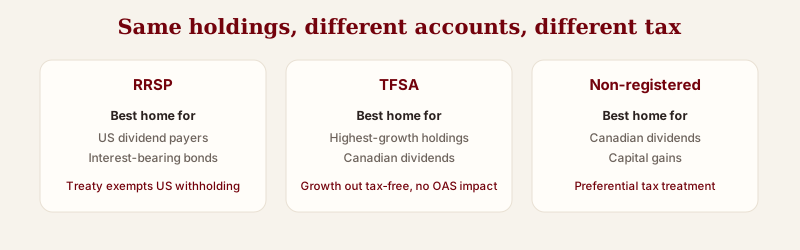
Asset Location: Which Investments Belong in Which Account
Most people choose which account to fund and stop there. Deciding what goes inside each one is a separate decision — and one of the few genuinely free gains available.
Every Loan Comes With an Insurance Offer. Should You Take It?
Most people think about this once, at the mortgage desk. But creditor insurance is attached to nearly every debt — and the questions are the same each time.
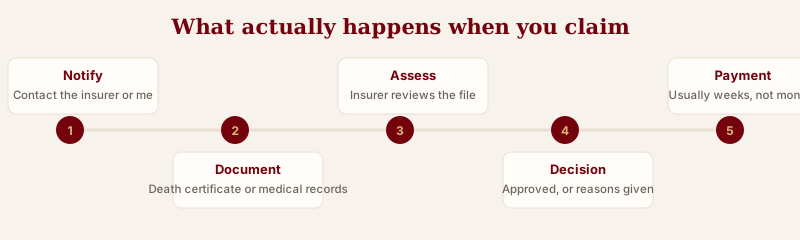
You're Sick Abroad. What Do You Actually Do?
Nobody reads this part until they need it, which is usually at 2am in an emergency department in another country. Ten minutes now saves a great deal later.
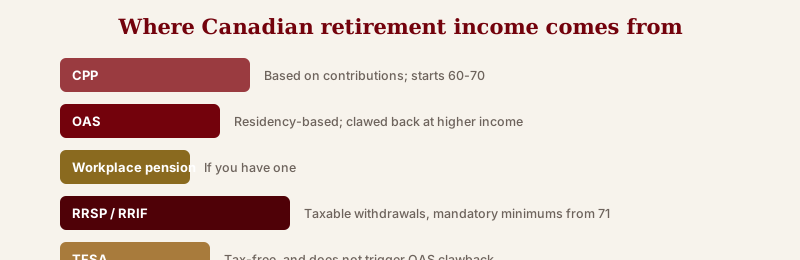
The OAS Clawback: Two Numbers, and Why Everyone Quotes the Wrong One
Search the OAS clawback threshold and you'll get two different numbers. Both are right. They describe different things, and knowing which is which matters.
Super Visa Insurance Requirements in 2026: The Complete Checklist
The insurance rules are the single most common reason Super Visa applications get refused. Here is exactly what IRCC requires in 2026, and the four mistakes I see families make most often.
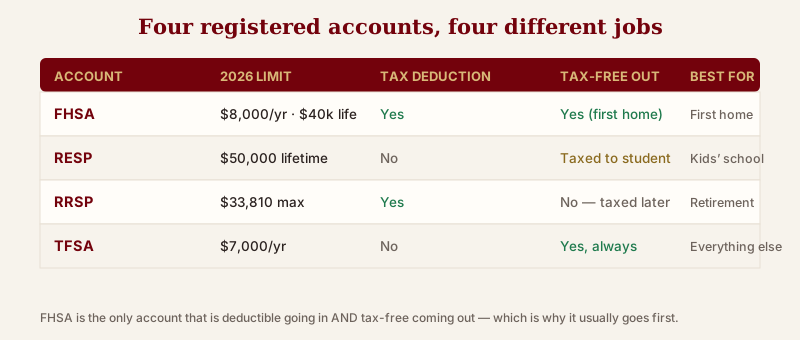
RESP, RRSP, TFSA or FHSA: Which Account Should You Fill First?
Four registered accounts, limited money. The right order depends on your income, your timeline and whether you're buying a home — not on which account is 'best'.
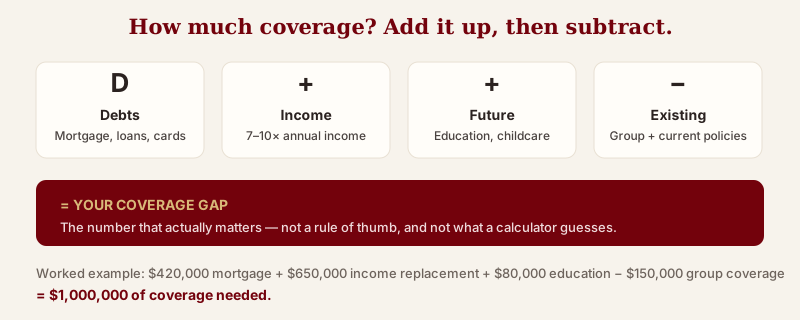
How Much Life Insurance Do You Actually Need?
"Ten times your salary" is a starting point, not an answer. Here's the calculation I actually walk clients through — and why most families land somewhere the rule of thumb never would.
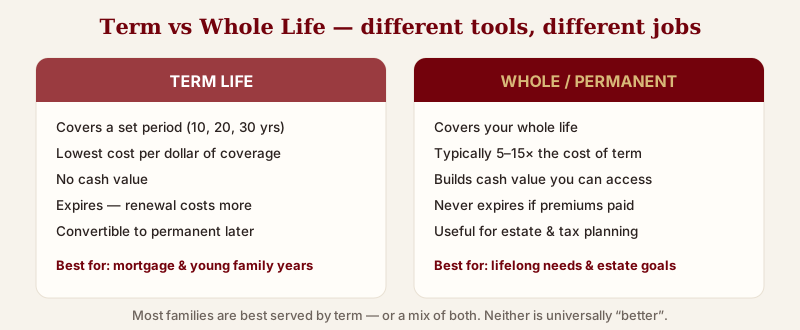
Term vs Whole Life Insurance: An Honest Comparison
This debate generates more heat than any other question in insurance. The truth is unglamorous: they are different tools, and the right one depends entirely on what you're trying to do.
A Newcomer's Guide to Insurance in Canada
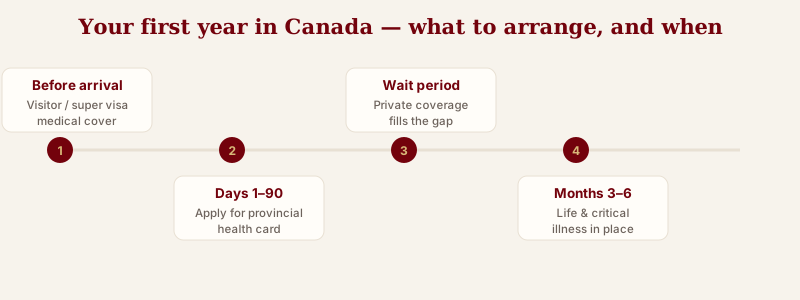
Canada's healthcare system is genuinely good — but eligibility and waiting periods vary by province, and the gap can be expensive. Here's what newcomers need to arrange, in what order, during that first year.
Protect your future with a free consultation
No pressure, no obligation — just clear, independent advice tailored to your life. Find out where you stand in a quick conversation.