This call comes in regularly. Parents have arrived to visit, nobody organised insurance beforehand, and the family has just realised that a hospital visit would be paid entirely out of pocket.
The good news: coverage can usually still be arranged. The important caveat: it works differently after arrival, and there are real limitations.
What changes after arrival
A waiting period usually applies. Most insurers impose a waiting period — commonly 48 hours to 7 days — before coverage for illness begins when a policy is purchased after the insured person has already entered Canada. Injury from an accident is often covered immediately.
This exists to prevent someone buying a policy the moment symptoms appear. It also means the days between arrival and the end of the waiting period are entirely uninsured.
Anything already happening is excluded. If a symptom appeared, a condition worsened, or medical advice was sought before the policy took effect, that is not covered. Buying insurance after a problem starts does not bring it within the policy.
Fewer options and higher prices. Not every insurer sells post-arrival coverage, and those that do may charge more or offer narrower plans. Buying before departure is meaningfully cheaper and broader.
The pre-existing condition question
This matters more than the waiting period for most visiting parents.
Coverage for pre-existing conditions generally requires the condition to have been stable for a defined period before the policy's effective date — often 90 or 180 days depending on the insurer and the person's age.
Stability typically means no new diagnosis, no new symptoms, no change in medication or dosage, no new treatment and no hospitalisation for that condition during the window. A blood pressure medication adjusted a month before travel can breach it.
Purchasing after arrival does not change this requirement, but it does compress your options, because you can no longer plan the purchase date around it.
What to do right now
- Arrange coverage today rather than tomorrow. The waiting period starts when the policy is issued, so every day of delay is another uninsured day.
- Be completely accurate about health history. Understating a condition to obtain a better rate is how large claims get denied. Disclose everything.
- Confirm the waiting period in writing and diarise the date coverage actually begins.
- Check whether the policy can be extended if the visit runs longer than planned. Extending an existing policy is usually far simpler than buying a second one.
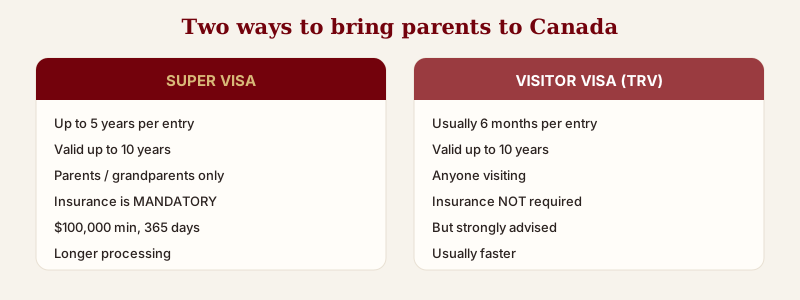
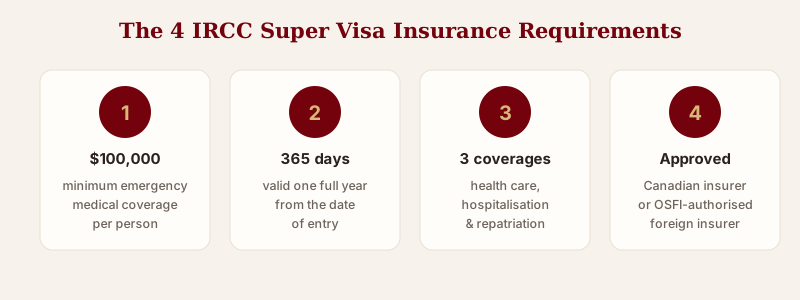
Post-arrival visitor insurance is a different product from Super Visa insurance. A Super Visa requires a paid policy of at least $100,000 covering a full 365 days, in place before the application is submitted from outside Canada. If a Super Visa is the goal, this is not a route to it.
If your parents are already unwell
An honest answer, because I would rather say it plainly than let someone buy a policy that will not respond.
If a health problem has already begun, insurance purchased now will not cover it. That is not an insurer being difficult; it is the definition of insurance. You would be paying premiums for coverage of other future events while the current problem remains your responsibility.
In that situation it is still often worth buying coverage for everything else that might happen during a months-long visit. But go in understanding what it does and does not do, rather than discovering it at claim time.
The lesson for next time
Arrange coverage before departure. It is cheaper, broader, has no waiting period, and lets you time the purchase around the stability window if a parent has a managed condition.
If your parents are here now and uninsured, call and we will sort something today. If they are coming next year, put a note in your calendar for a month before the flight — that is when this becomes easy instead of complicated.