The Super Visa asks you to do things in an awkward order. You have to show a paid insurance policy when you apply. The decision can take months. Only then do your parents book a flight. So on the day you buy the insurance, nobody knows the date it should begin.
The good news is that the start date is the easiest thing on the policy to change, as long as you change it in time.
What IRCC asks for
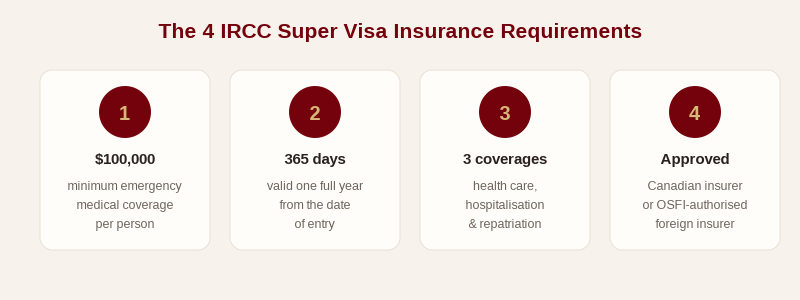
The insurance has to be valid for at least one year from the date of entry to Canada. That wording comes from IRCC's eligibility page, and it has two practical effects.
- The policy must run for a full 12 months. A six-month policy for a six-month visit does not qualify.
- The year is measured from the day your parent arrives. If the policy started two months before they landed, it will not cover a full year from entry.
The other requirements do not change with the date: at least $100,000 of emergency medical cover, including hospital care and repatriation, from an insurer IRCC accepts, and paid for. They are set out in Super Visa insurance requirements.
Picking a date when you apply
Put your best estimate of the arrival date. Look at the current IRCC processing time for your parents' country, add a few weeks for booking flights, and use that. The Super Visa page on this site shows the current processing estimates.
If you have to guess, guess later. A start date that turns out to be too late is easy to bring forward. A start date that has already passed is a problem.
What the application needs is a paid policy from an accepted insurer, for the right amount, lasting a year. The travel date gets fixed after the visa is issued, and the policy date is changed to match.
Changing the date
Once the visa is approved and the flight is booked, tell me the arrival date and I ask the insurer to change the start date to match. They issue an updated confirmation and the 12 months run from the new date.
Before the policy has started, insurers normally do this without a fee. Three points to know.
- It must be done before the current start date. Once that day arrives the policy is active, and a change becomes a cancellation and a new purchase, with whatever refund terms apply.
- A birthday can change the price. Premiums are set by age on the start date. If moving the date carries your father from 69 to 70, the insurer may reprice. Moving it earlier can occasionally do the opposite.
- Insurers limit how far ahead a policy can start. If a decision is taking a very long time, you may need to move the date more than once.
Why the policy should not start before they arrive
Some people set the start date to the day they buy the policy, thinking it is safer. It is not. Your parents are not in Canada, so the policy cannot pay for anything, and every week that passes is a week of cover you paid for and will never use. It also means the policy ends less than a year after they land, which is the opposite of what IRCC asks for.
Set the start date to the day they land in Canada. If the flight arrives after midnight, use the arrival date, not the departure date.
Situations that come up
The visa arrives sooner than expected. Bring the start date forward to the arrival date. Insurers do this as readily as moving it back. Do not let your parents travel on a policy that starts three weeks after they land.
Parents arriving on different dates. If your mother is coming in March and your father in May, a single couple policy with one start date will leave one of them either uncovered or paying for unused weeks. Ask for separate start dates. Some insurers do this on one policy, others issue two. A couple discount may be affected, so compare the cost both ways.
The flight is delayed by a day or two. Nothing needs to change. A policy that started a day before arrival still covers them for the year in practice, and nobody will ask you to reissue it for one day. If the delay runs to weeks, move the date.
A stop in another country on the way. Super Visa cover is for Canada. A few days with relatives in the UK or the Gulf on the way over is not covered by it. If the stop is more than an airport connection, buy a short travel policy for those days and start the Super Visa policy on the day they reach Canada.
The trip is cancelled after the date was set. Tell the insurer before the start date and it is a simple cancellation. After the start date, it becomes a refund request with proof that they never travelled.
What the confirmation should show
When the insurer sends the updated document, check it before you forward it to your parents.
- Each parent's name exactly as in the passport, and the correct date of birth.
- The start date, matching the arrival date.
- An end date at least 365 days later.
- The sum insured, $100,000 or more per person.
- The insurer's name and the policy number.
- A statement that the premium is paid, or the payment schedule if it is a monthly plan.
A wrong letter in a name or a swapped day and month in a birth date is easy to fix this week and awkward to fix at an airport.
Showing it at the border
Your parents should travel with the policy confirmation that shows the correct start date and the full year of cover. A border officer can ask to see it, and a confirmation with an old date invites questions nobody wants after a long flight. Give them a printed copy and keep one on a phone.
If the insurance is bought after arrival
This sometimes happens when the original policy was cancelled, or a parent came on a visitor visa first. Cover bought after someone is already in Canada usually has a waiting period before sickness is covered, often a few days. Injuries from an accident are normally covered from the start. It varies by insurer and can be longer for older travellers.
A waiting period is a gap with no cover for illness, at the age when illness is the main risk. Avoid it by having the policy in place before the flight. There is more on this in buying visitor insurance after arrival.
Second and later visits
A Super Visa allows many entries over its life, and each stay can be long. The same thinking applies each time: your parents need valid cover for the time they are in Canada, and you should be able to show it.
If they leave for a few months and come back, do not assume the first policy simply carries on. Some policies end when the insured person returns home. Others continue but look again at their health conditions on return. Ask before the trip.
A timeline that works
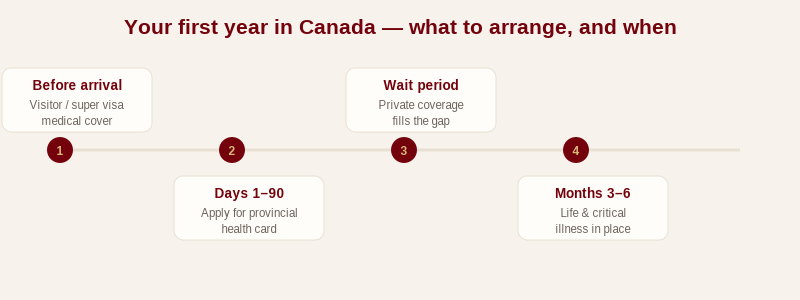
- Before applying. Compare plans, disclose health history in full, buy the policy with an estimated start date.
- While waiting. If the estimated date is getting close and there is no decision, move it forward. Put a reminder in your phone two weeks before the date.
- Visa approved, flight booked. Change the start date to the arrival date. Get the new confirmation.
- Before the flight. Print the confirmation. Save the insurer's emergency number in your parents' phone and yours.
- Eleven months in. If they are staying, arrange the next policy before this one ends so there is no gap.
Letting the start date pass while you wait for IRCC. The policy becomes active, the weeks start counting, and if the visa is then refused the refund may not be 100 percent. Changing the date takes one email. See how refunds work.
You can compare Super Visa quotes now with an estimated date and change it later. If you buy through me, I keep track of the date with you and move it when your plans do.
General information only. This article explains concepts in general terms and is not financial, tax, legal or insurance advice for your particular situation. Policy terms differ between insurers and change over time, so read the wording of the policy you are buying.